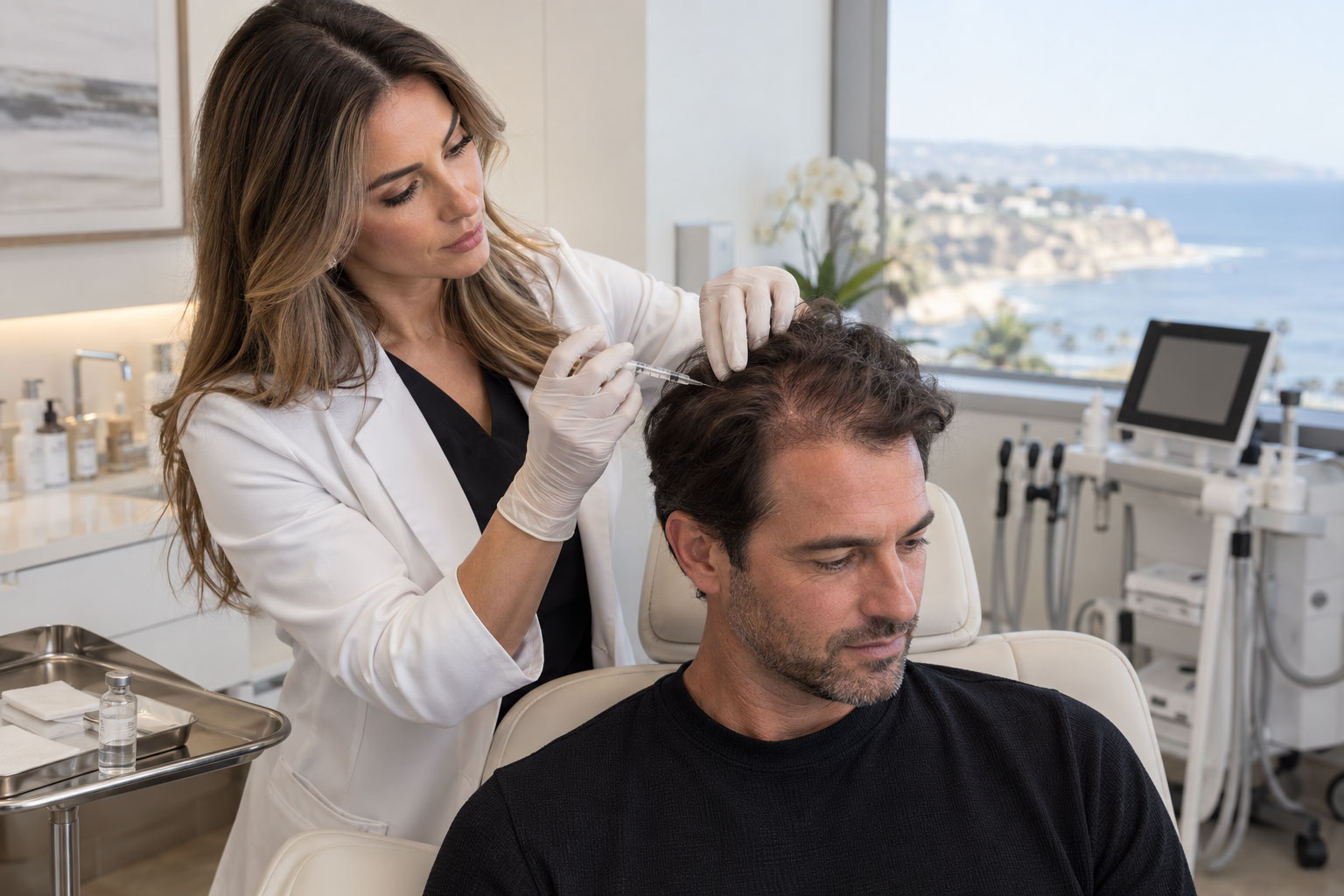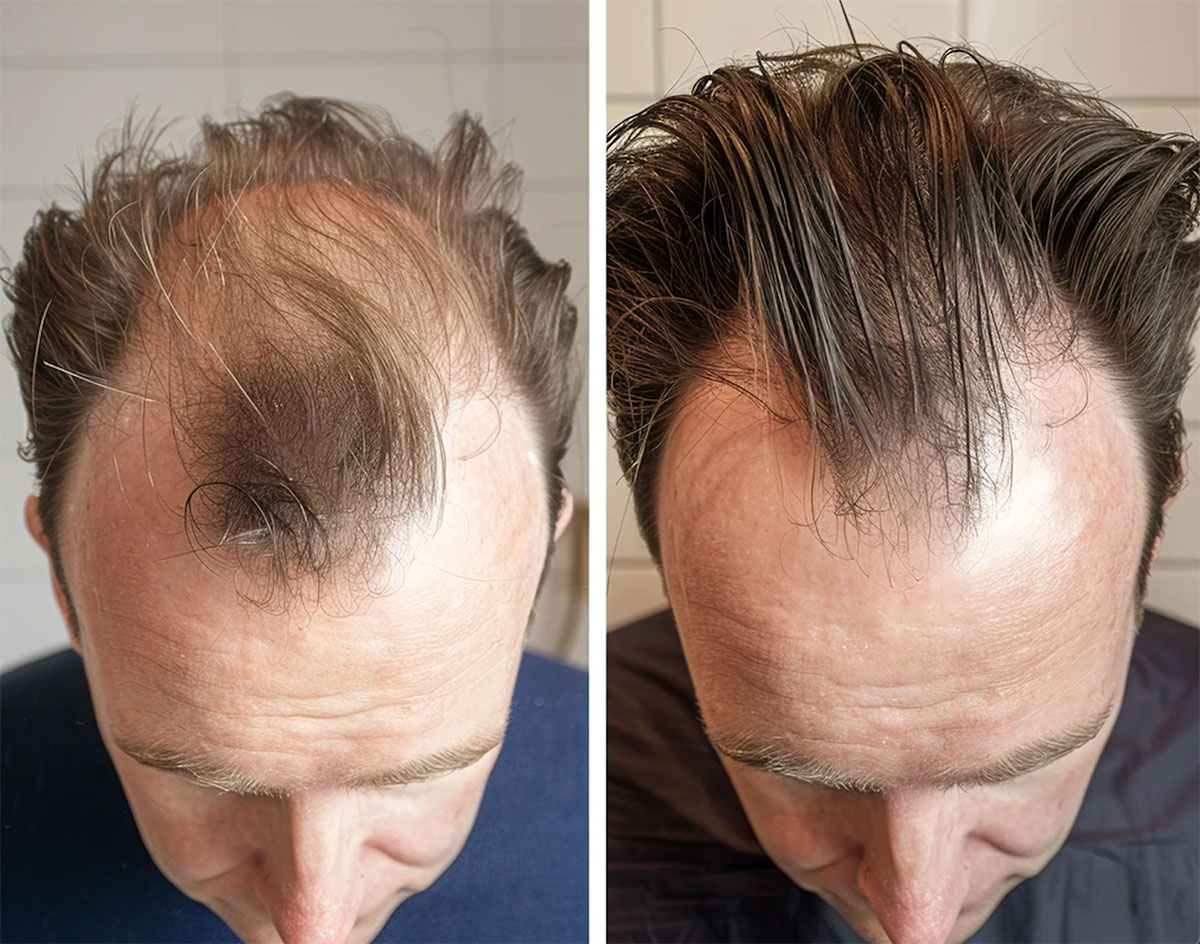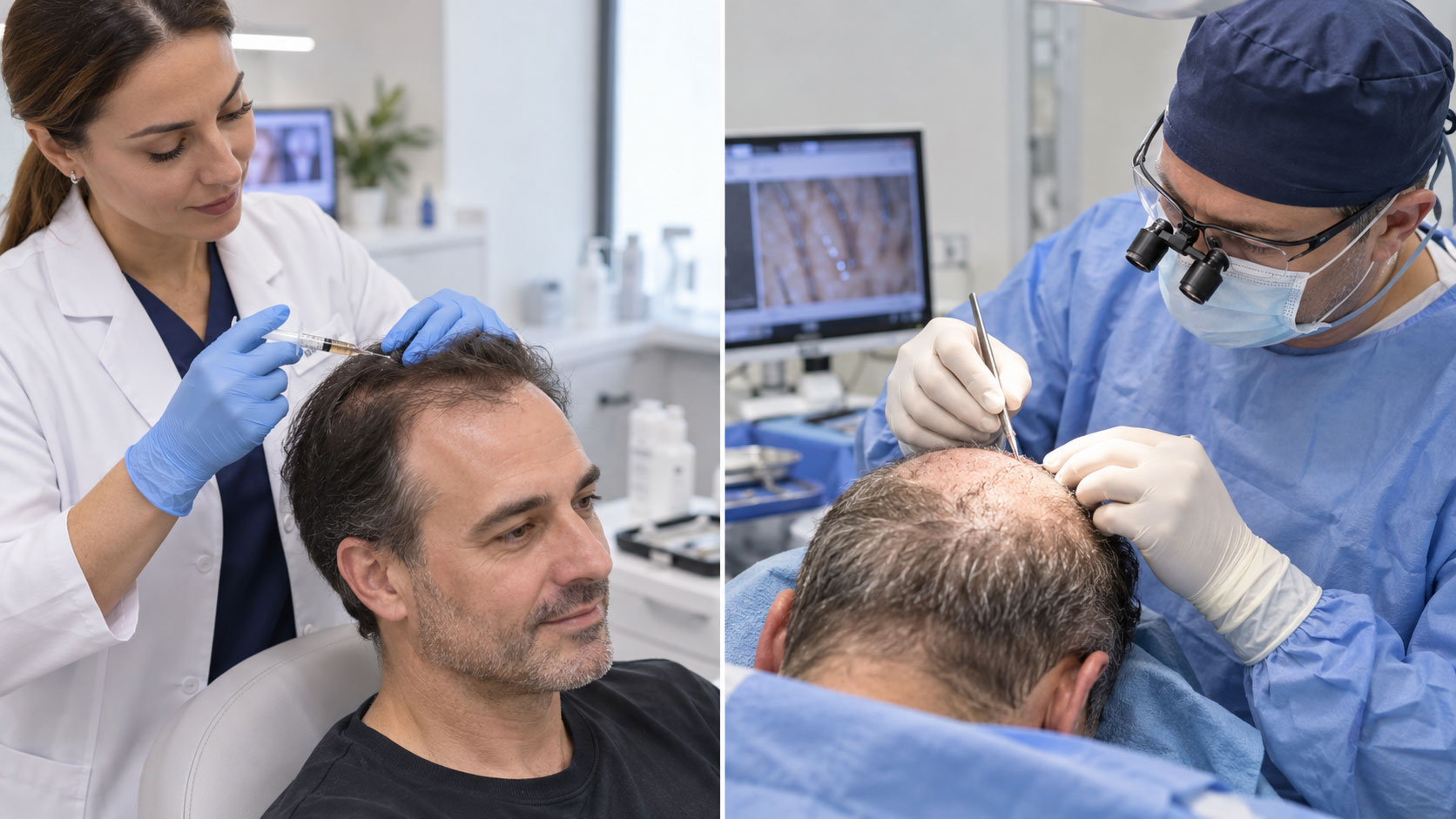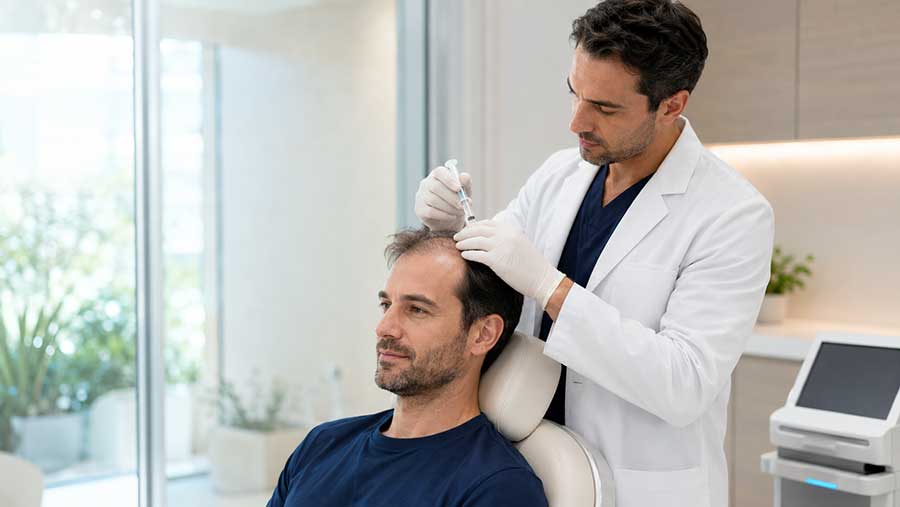
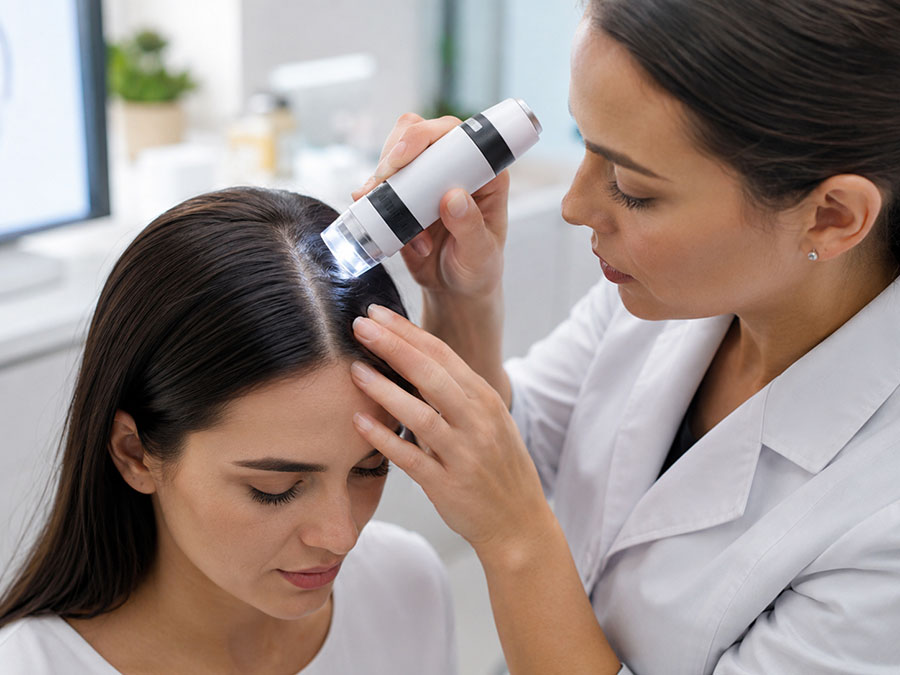
Recovery after stem cell hair restoration works differently from surgery because the focus shifts from wound healing to biological timing. The stem cell hair restoration recovery timeline involves no required downtime, so patients resume regular activities immediately while mild injection-site effects settle within hours to days. Knowing what happens in each phase helps patients avoid judging results too early, during the weeks when follicles are only beginning their regenerative response.
Key Takeaways
- The stem cell hair restoration recovery timeline requires no downtime, so patients return to regular activities the same day
- Mild redness, swelling, or tenderness at injection sites usually settles within a few hours to a few days
- Visible hair growth in week 1 is not expected, because follicles respond on the natural hair cycle rather than a weekly schedule
- Early improvements may appear within a few months, with average results in 6-9 months and full results at 12 months
- Individual results vary with hair loss extent, follicle activity, scalp health, and adherence to aftercare protocols
Below, you will find what to expect at every stage, from treatment day through the 12-month full-results checkpoint. Hair growth stages after therapy follow natural biological cycles rather than a linear weekly climb, which explains why improvements appear gradually and vary between individuals. The specialists at Regenicel Aesthetics in La Jolla use this timeline to plan follow-up visits and track progress for every patient.
Stem Cell Hair Restoration Recovery Timeline: What Happens and When
Stem cell Biologics hair restoration uses regenerative therapy to revitalize dormant follicles and encourage healthier, more consistent growth. Regenicel Aesthetics treats hair loss non-surgically using exosome therapy derived from stem cells, delivering biological signals to the scalp through minimally invasive injections. The aim is to reactivate follicles that have gone dormant or miniaturized, rather than relocating follicles the way transplant surgery does. Here is how recovery usually unfolds.
| Phase | Timeframe | What is happening | What patients typically notice |
|---|---|---|---|
| Immediate | Day 0 to day 3 | Injection sites settle, no downtime required | Mild redness or tenderness; normal activity resumes the same day |
| Early recovery | Days 4 to 7 | Injection-site effects resolve | Scalp feels normal, no hair change expected |
| Initiation | Weeks 2 to 4 | Regenerative signals act at the cellular level | Little or no change, baseline photos taken |
| Early observation | Months 2 to 3 | Treated follicles begin new growth phases | Some notice fullness, texture change, or less shedding |
| Build phase | Months 4 to 6 | Earlier responses mature, follow-up review | Gradual density change in treated areas |
| Main result window | Months 6 to 9 | Cumulative growth across successive cycles | Average results for most patients |
| Full results | Month 12 | Multiple growth cycles complete | Final assessment of density and coverage |
Overview of Stem Cell and Exosome-Derived Therapies
Exosomes are extracellular vesicles derived from stem cells that carry growth factors, proteins, and signaling molecules. These messengers reach the scalp through precise intradermal injections targeting areas of thinning or miniaturization. Regenicel Aesthetics positions stem cell restoration as a non-surgical option for people who want natural-looking improvement without the recovery demands of transplant surgery.
Objectives of the Treatment in Hair Follicle Revitalization
The primary objective is to extend the anagen growth phase and reverse the follicular miniaturization caused by androgenetic alopecia. Secondary objectives include improving hair texture, reducing excessive shedding, and supporting improvements that keep developing over months. Outcomes depend on hair loss stage, follicle viability, age, genetics, and adherence to aftercare protocols.
Differences from Surgical and Conventional Hair Restoration Methods
Surgical transplantation moves follicular units from donor areas to thinning regions, which involves incisions, sutures or scabs, and a recovery period with activity limits. Stem cell and exosome-derived therapies use injections instead, so recovery centers on injection-site comfort rather than wound healing.
| Factor | Stem cell and exosome therapy | Surgical hair transplant | Topical minoxidil |
|---|---|---|---|
| Method | Intradermal injections | Extraction and implantation of follicular units | Daily topical application |
| Downtime | None required | Recovery period with activity limits | None |
| What it targets | Dormant or miniaturized follicles | Relocated donor follicles | Existing follicles, ongoing stimulation |
| First visible change | Often 2 to 3 months | Typically 3 to 4 months | At least 4 to 6 months |
| Ongoing commitment | Treatment series, then maintenance | Single or staged procedures | Daily use to hold results |
Stem Cell Hair Restoration Recovery Timeline: The First Week After Treatment
Patients return to regular activities immediately after the procedure, with no required downtime. Most people resume work, social plans, and daily routines the same day without visible disruption. Mild localized symptoms at injection sites may occur but usually resolve without intervention.
Same-Day Activity and No Required Downtime
Regenicel Aesthetics confirms that no downtime is required and that patients can return to regular activities immediately, since the non-surgical method removes any need for bandaging or sutures. Patients should still follow provider-specific guidance on strenuous exercise, heat exposure, and scalp manipulation during the first 24 to 48 hours. Routine work, driving, and social activity are usually unrestricted.
Common Mild Injection-Site Effects During Week 1
Mild redness, swelling, or tenderness at injection sites may occur and usually subsides within a few hours to a few days. The scalp may feel slightly sensitive to touch or show faint pink coloring in treated areas, with days 1 through 3 the most noticeable window. Post-treatment week 1 with stem cells focuses on scalp comfort, not hair growth assessment, since follicles need weeks to months to respond.
Essential Aftercare Guidelines and Comfort Tips
Week 1 aftercare comes down to gentle handling and compliance with provider instructions. Specific guidance on shampooing timing, sun exposure, alcohol, anti-inflammatory medication, and supplement use comes from the treatment team.
| Do this during week 1 | Avoid this during week 1 |
|---|---|
| Keep the scalp clean with mild, recommended products | Harsh chemical treatments, dyes, or relaxers |
| Handle the scalp gently when washing and drying | Aggressive massage, scratching, or picking at treated areas |
| Follow provider guidance on exercise for 24 to 48 hours | Heat styling, saunas, and prolonged sun exposure |
| Take baseline photos for later comparison | Judging the treatment on week 1 appearance |
| Contact the clinic about unusual swelling or pain | Waiting it out if signs of infection appear |
Why Visible Hair Growth Takes Time After Treatment
Visible hair growth takes time because follicles must progress through natural biological phases before producing longer, thicker terminal hairs. Regenerative treatment influences follicle behavior at the cellular level, and those changes still have to travel through the normal growth cycle, which is why even optimally responding follicles show nothing in the first days or weeks.
The Hair Growth Cycle and Its Phases Explained
Each phase behaves differently, which is why results arrive on a monthly rather than weekly scale.
| Phase | Typical duration | Share of scalp follicles | What it means for results |
|---|---|---|---|
| Anagen (growth) | 2 to 6 years | About 85 to 90 percent | Hair elongates about 1 cm per month; this is the phase treatment aims to extend |
| Catagen (transition) | A few weeks | About 1 to 2 percent | Follicle activity slows and the shaft detaches from its nutrient supply |
| Telogen (resting) | About 3 months | About 10 to 15 percent | The follicle stays dormant before shedding and starting a new anagen cycle |
Impact of Androgenetic Alopecia on Hair Follicles
Androgenetic alopecia affects up to 50% of males and females and involves progressive terminal scalp hair loss after puberty, with male pattern loss affecting 30-50% of men by age 50. Androgen receptor activation shortens anagen and drives follicular miniaturization, converting thick terminal hairs into fine, vellus-like hairs. Affected follicles spend less time producing visible hair, and reduced diameter and pigmentation make coverage look thinner even when follicle count stays stable.
Biological Reasons for Gradual and Variable Results
A follicle in telogen at the time of treatment may not produce improved hair until it enters a new anagen phase weeks or months later. Variability arises because follicles across the scalp sit in different phases at once, with genetic, hormonal, and environmental factors shaping the response. For comparison, the FDA-approved treatments for pattern baldness, topical minoxidil and finasteride, also require at least 4-6 months of consistent use before noticeable improvement.
The First Month After Treatment: Weeks 2 Through 4
The first month is a period of biological initiation rather than visible transformation. Regenerative signals begin interacting with follicular cells, but those early changes do not translate into visible growth yet. This stretch is often the hardest psychologically, because patients want confirmation that the treatment is working.
Scalp Condition and Comfort During Weeks 2-4
Weeks 2-4 typically bring complete resolution of injection-site effects, with the scalp feeling normal. Normal hair care, including styling, coloring, and product use, can resume unless the provider directs otherwise. Persistent irritation or itching is not expected, and anything concerning is worth a call to the treatment team.
Why Early Visual Changes Are Usually Minimal
Visible results may be minimal or absent in weeks 2-4 because follicles need longer to convert regenerative signals into measurable output. Comparing pre-treatment and one-month photos for a definitive verdict is premature. The timeline Regenicel communicates points to improvements within a few months, average results in 6-9 months, and full results at 12 months.
Managing Expectations and Monitoring Progress
Patients support recovery by keeping scalp practices healthy and continuing any concurrent hair health strategy their provider recommended. Monitoring should begin with baseline documentation and stop short of daily checking. Monthly photos in consistent lighting, plus notes on shedding patterns and texture, track the subtle changes that precede visible density gains.
Early Visible Improvements in Months 2 and 3
Early visible improvements may appear within a few months as follicles begin producing healthier, thicker terminal hairs. Regenicel supports visible results in 2-3 months for some patients, though individual variation means not everyone notices change this early. Weeks 5-8 mark the shift from first-month baseline to the early-observation period.
Signs to Watch for in Months 2-3
Possible early changes include more fullness when hair is styled, texture that feels thicker or stronger, fewer hairs lost during washing, and better scalp coverage under certain lighting. Comparing baseline photos with photos at the 2-3 month mark keeps the assessment objective. Discussing what you see with the treatment team during follow-up consultations confirms whether progress is on track or whether the protocol needs adjustment.
Variability in Individual Response and Timing
Results vary with genetic predisposition, androgenetic alopecia pattern, follicle health, and age. Patients with milder miniaturization often notice improvement earlier than those with advanced thinning, and concurrent treatments, nutrition, stress, and hormonal factors also influence timing. Some see meaningful change by month 3 while others need 6-9 months, which reflects biological diversity rather than treatment failure.
Recommendations for Tracking Changes and Photos
Consistent method matters more than frequency. Monthly photos should use the same lighting, background, hair part, and camera distance, with shots from the front, crown, and both sides to document density across different scalp regions. Notes on texture, shedding volume, styling ease, and scalp comfort add qualitative data that helps guide follow-up visits.
Progress Between Months 4 and 9
Months 4-6 are a monitoring and follow-up period during which earlier cellular responses mature into more noticeable improvements. Months 6-9 are the main progress window. Regenicel states that average results are expected in 6-9 months, making this the period when most patients can reasonably evaluate whether treatment delivered what they wanted.
Continued Hair Follicle Stimulation and Growth
Hairs that entered anagen shortly after treatment may now have grown several centimeters, adding visible length and density, while follicles that were in telogen may have moved into anagen. The environment created by exosome-derived factors may keep influencing follicle behavior for months, and patients on a treatment series may experience overlapping regenerative waves.
The 6-9 Month Result Window
Clinical evidence from stem-cell-derived conditioned medium trials covered treatment durations ranging from weeks to months, and longer protocols were associated with greater improvement than shorter ones, with p=0.02 in pooled analysis. Pooled trial analysis documented increased hair density with a mean difference of 14.93 hairs (95% CI 10.20-19.67), and systematic review evidence documented increased thickness with a mean difference of 18.67 μm (95% CI 2.75-34.59). Assessment should compare current appearance against the pre-treatment baseline, and reading patient experiences alongside your own photo record helps keep expectations grounded.
Importance of Follow-Up and Ongoing Evaluation
Follow-up appointments during months 4-9 let providers assess progress objectively using standardized measurements and photo documentation, showing whether results align with expectations or whether additional sessions would help. These reviews also open the discussion on complementary strategies, from hair care products to nutritional support.
Full Results at the 12-Month Mark
Full results are expected at 12 months following stem cell hair restoration treatment. Month 12 is the full-results checkpoint and the consultation planning point, because multiple hair growth cycles have completed and density, thickness, and coverage can be assessed accurately.
Typical Outcomes and Final Assessment Timing
Typical 12-month outcomes include improved hair density, increased hair diameter, and better scalp coverage, reflecting the cumulative effect of extended anagen phases and reversal of follicular miniaturization. Earlier checkpoints provide progress markers; the 12-month review offers the most complete picture of what treatment achieved.
Factors Influencing Long-Term Success
Several factors shape how much improvement appears and how well it holds.
| Factor | Effect on the recovery timeline and final outcome |
|---|---|
| Extent of hair loss | Earlier-stage miniaturization responds sooner than advanced, long-standing loss |
| Follicle activity and scalp health | Healthier baseline follicles convert regenerative signals into growth more readily |
| Age and genetics | Influence both the pace of response and the underlying rate of miniaturization |
| Androgenetic alopecia pattern | Progressive loss may continue in untreated areas |
| Treatment series | Multiple sessions often produce greater cumulative benefit than a single procedure |
| Concurrent treatments | Minoxidil, finasteride, or nutritional support may add benefit through other mechanisms |
| Aftercare adherence | Consistent scalp care and follow-up support the full 12-month result |
Candidacy for any of these combinations is confirmed during clinical evaluation, and results vary between patients.
Planning Next Steps with a Specialist
Some patients choose maintenance sessions to preserve and extend their 12-month outcome, while others explore complementary treatments that address different aspects of hair appearance. Reviewing treatment galleries helps set realistic expectations for ongoing care. The 12-month consultation is also the moment to raise new concerns, since androgenetic alopecia is progressive and previously unaffected areas may start to show miniaturization.
Stem Cell Hair Restoration Recovery Timeline: Personalized Care and Realistic Expectations
The stem cell hair restoration recovery timeline pairs minimal physical recovery with a clear understanding of gradual biological progress. Instead of weeks of wound healing and activity restriction, patients return to normal life immediately while follicles respond over months. The team’s expertise in exosome-derived therapies supports treatment planning based on hair loss extent, follicle health, and the outcome the patient wants.
Knowing what to expect each week post stem cell treatment prevents premature disappointment and supports informed decisions. The recovery timeline is a biological progression shaped by individual factors, not a fixed schedule of guaranteed weekly milestones.
Book Your Consultation with Regenicel Aesthetics
If thinning hair is affecting your confidence, the next step is a straightforward conversation about whether you are a candidate. Regenicel Aesthetics provides non-surgical stem cell hair restoration, exosome therapy, and eyebrow and beard treatment from the La Jolla Wellness Center at 8950 Villa La Jolla Drive, Suite B115. A specialist reviews your scalp and explains what the recovery timeline would look like for your pattern of hair loss.
Call +1 858-758-1573 or book a consultation to get a personalized quote and treatment plan. You can also contact the clinic with questions before you schedule. Results vary between patients, and candidacy for regenerative treatment is confirmed during clinical evaluation.
Frequently Asked Questions
There is no required downtime, so patients return to regular activities the same day. Mild redness, swelling, or tenderness at injection sites usually settles within a few hours to a few days, and by weeks 2-4 the scalp typically feels completely normal. The longer part of the timeline is waiting for follicles to respond over months.
Some patients notice early improvement in fullness or texture within 2-3 months. Average results are expected in 6-9 months and full results at 12 months. Nothing visible should be expected in week 1 or the first month, because follicles must move through natural growth phases first. Timing varies with hair loss extent and follicle activity.
In most cases, yes, though your provider gives specific guidance on timing. Use mild, recommended products and handle the scalp gently through the first week. Avoid harsh chemical treatments, dyes, and heat styling while injection sites settle. Normal hair care usually resumes by weeks 2-4 unless your provider directs otherwise.
Session count depends on hair loss stage, follicle viability, and your goals, and it is set during consultation. Many patients follow a series rather than a single procedure, because overlapping regenerative waves can add to cumulative benefit, and clinical evidence associates longer protocols with greater improvement. Your provider confirms the plan after assessing your scalp.
The two work differently. A transplant surgically relocates existing follicular units and involves incisions, a healing period, and temporary activity limits. Stem cell and exosome-derived therapy uses injections to deliver regenerative signals to follicles already in the scalp, so recovery focuses on injection-site comfort with no downtime. Which option suits you depends on hair loss stage and follicle viability, confirmed during evaluation.